Renovating the Butterbox: Reframing simple joys for contemporary living
Compact spaces, rectangular forms, and always a toilet at the end of the Corridor… Why we think the humble Butterbox might still be worth renovating.
Picture this: in the post-war era, mid-century, while Modernism was taking hold, in the mainstream there was a desire for honesty and simplicity in housing. These economical and functional homes - typically 3-bedroom, 1-bathroom, rectangular with a simple gabled or pitched roof - sometimes built of timber, and sometimes clad in more substantial brickwork, often built using high-quality hardwoods that are often unattainable today. They were built in the context of local skills in decorative stone walls, steel balustrading and timber furniture-making, simple homes highlighted with bright splashes of fun colour (sometimes dubious in today’s eyes). Aesthetically there was also a desire for the simple and the unadorned, honesty in decoration and a real turning away from the ornate past - the old ideals having proven so untrustworthy.
In this context arose the humble Butterbox. Early examples mirrored the thinking of its time - separated kitchens, sparse lighting, externally-accessed or garage-located Laundries. Economy meant compact spaces and simplicity. Anecdotally, we’ve also learnt that in certain parts of Brisbane there are ‘army housing’ which stipulated high levels of material quality, but were built with ‘sweat equity’ by the owners themselves. Many of these homes and suburbs still stand in Brisbane today.
In today’s world, these Butterboxes are somewhat proudly unfashionable and often slated for demolition. Living in these homes, or indeed renovating them, means accepting certain limitations: openings that can be tricky to relocate or resize; scale of space that is more compact than preferred; ceiling heights that are limited; and a general modesty that runs against the grain of today’s tastes.
We still think these homes are worth saving today.

Deck with a House, in its unimproved state, was about as original as it comes - although the L shape is a little unusual compared to the more standard rectangular form.
What exactly is a Butterbox home?
We would describe a Butterbox home as one that ticks most of these boxes:
In Brisbane, constructed predominantly from the 1960s to 1980s.
Typically brick veneer or lightweight cladding over a timber frame, low on adornment and decorative frills.
Rectangular in form, usually two-storey, with a simple pitched gable or hipped roof.
The livable storey usually has a compact, near U-shaped kitchen, with a small adjacent dining and living space. This forms the public part of the home, perhaps with small deck/patio annexes that are often glazed into sunrooms.
The private part of the home usually has three relatively undersized bedrooms, a shared Bathroom and a WC at the end of a Corridor.
The lower level is usually just under legal habitable height, with a garage and laundry. These spaces have often been fitted out in an adhoc way over time.
Is detonating the only answer?
Amidst all this, we still think these homes are worth renovating - but this is on a case-by-case basis, and we love to explore options on behalf of our clients. In our first decade of practice we have been approached to assist with a range of Butterbox projects. Three in particular come to mind:
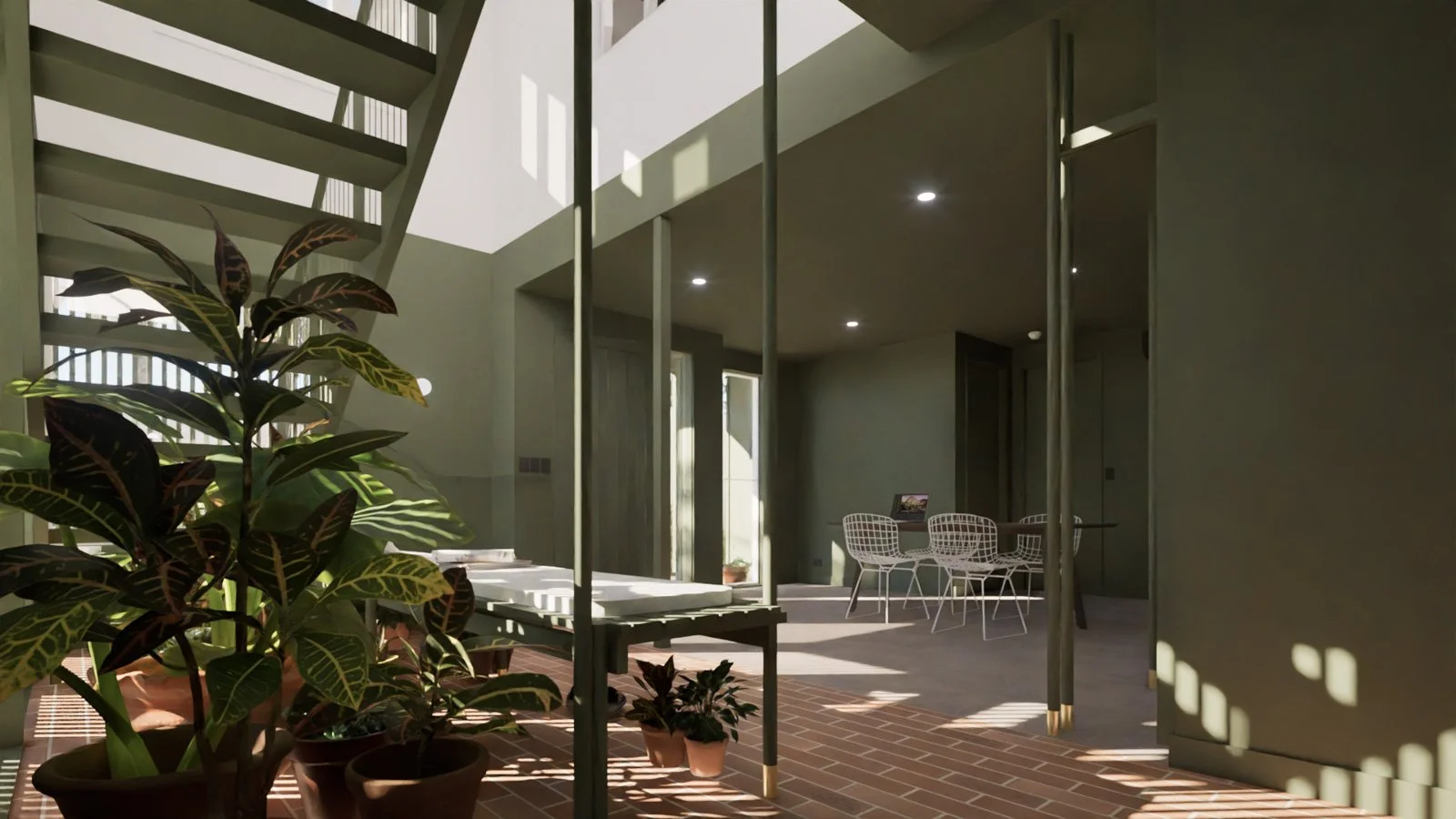
A simple, lightweight timber Butterbox in the southside of Brisbane, which was lifted, extended, re-roofed and reconfigured to become a 4-bed, near-luxury contemporary home complete with a double-height living and stair void space. The rationale for working with the existing home was to retain previous alterations to the property.
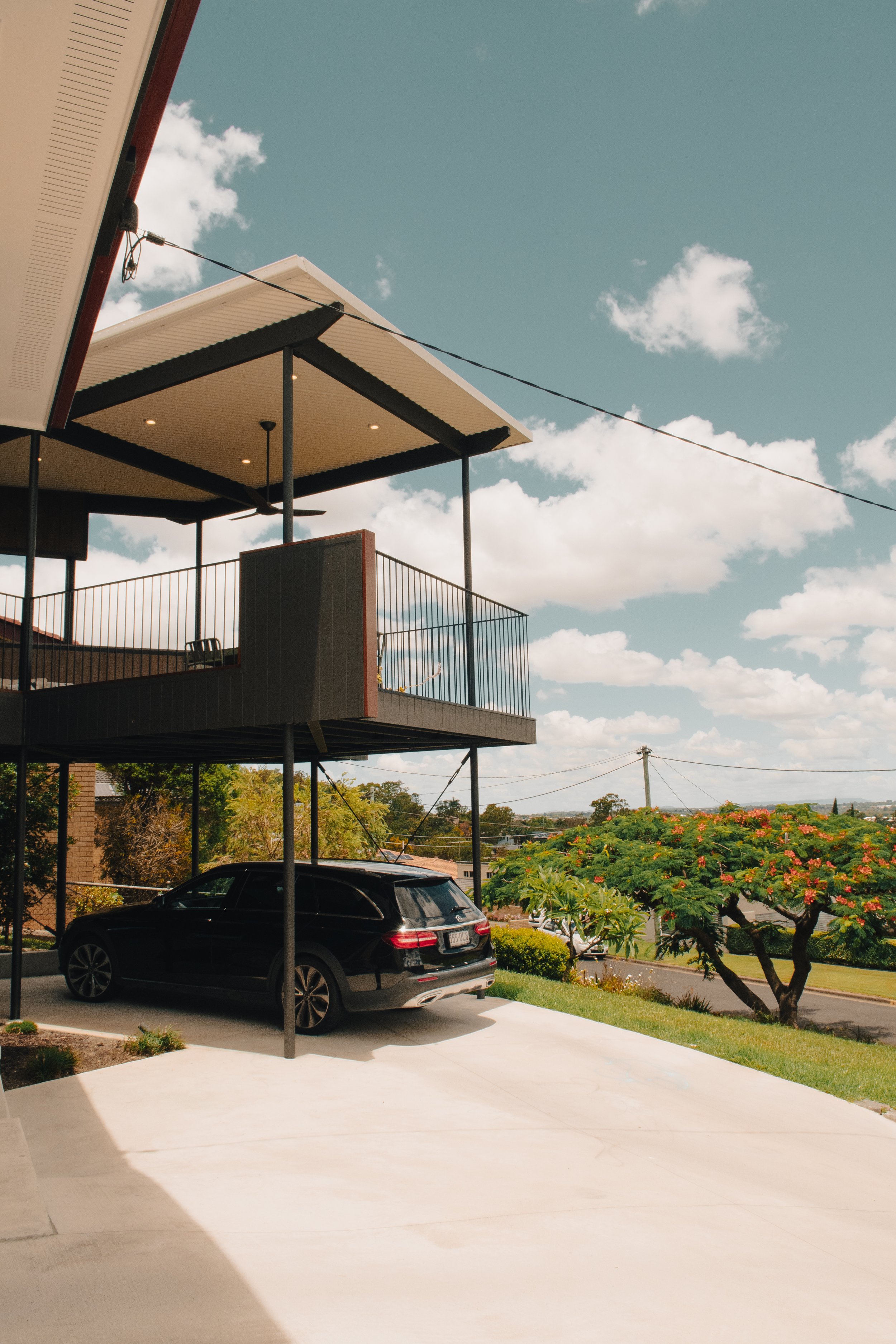
On a hilly site with city views in Moorooka, the client chose to demolish the old Butterbox home - in its place was a new-build, 4-bedroom home, prepared for a future Master Retreat extension to be added as an additional level. Though we had presented a lower-cost Extension option, the chief aim was to ensure generous volumes of space are aligned with the city views.
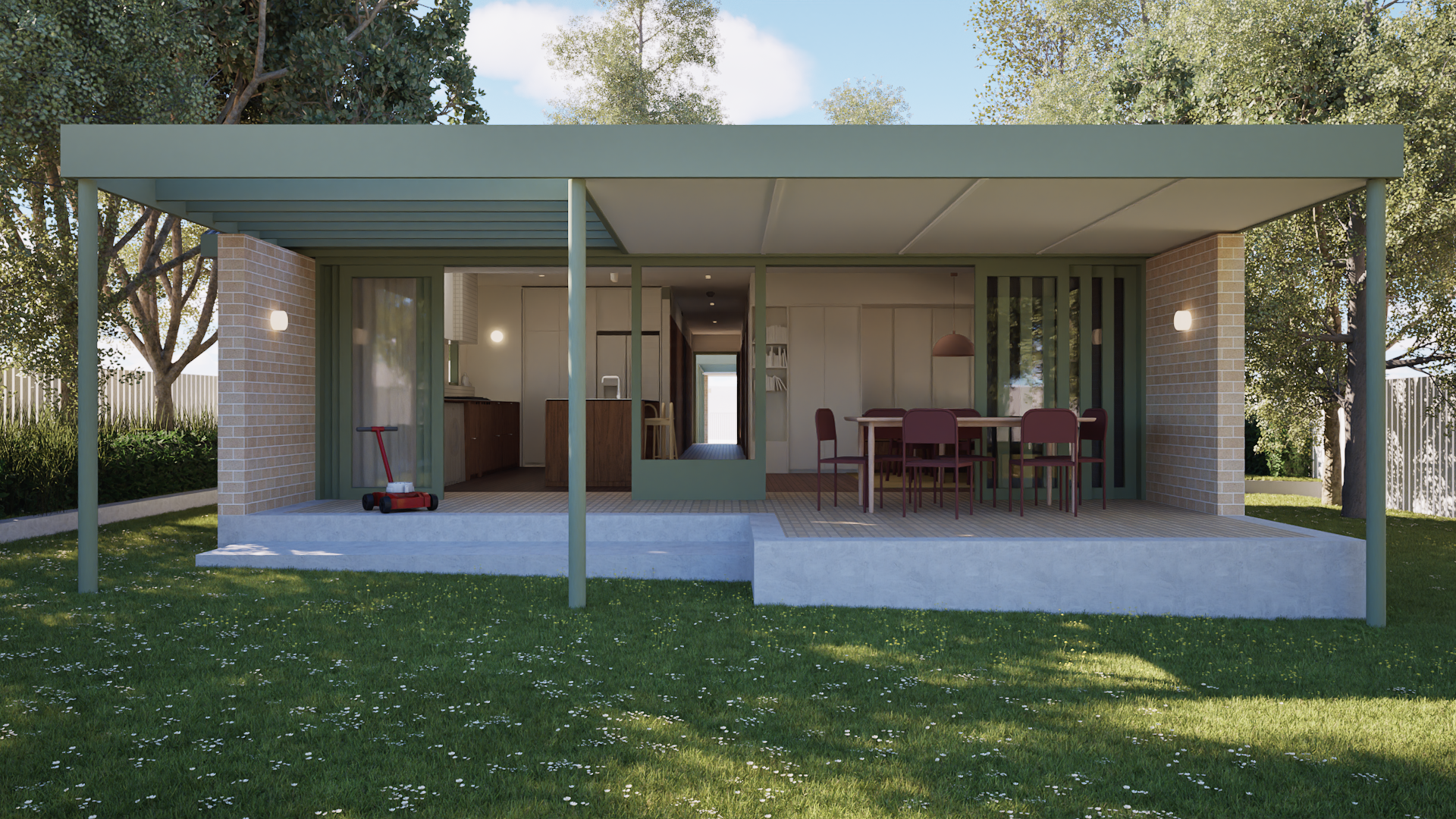
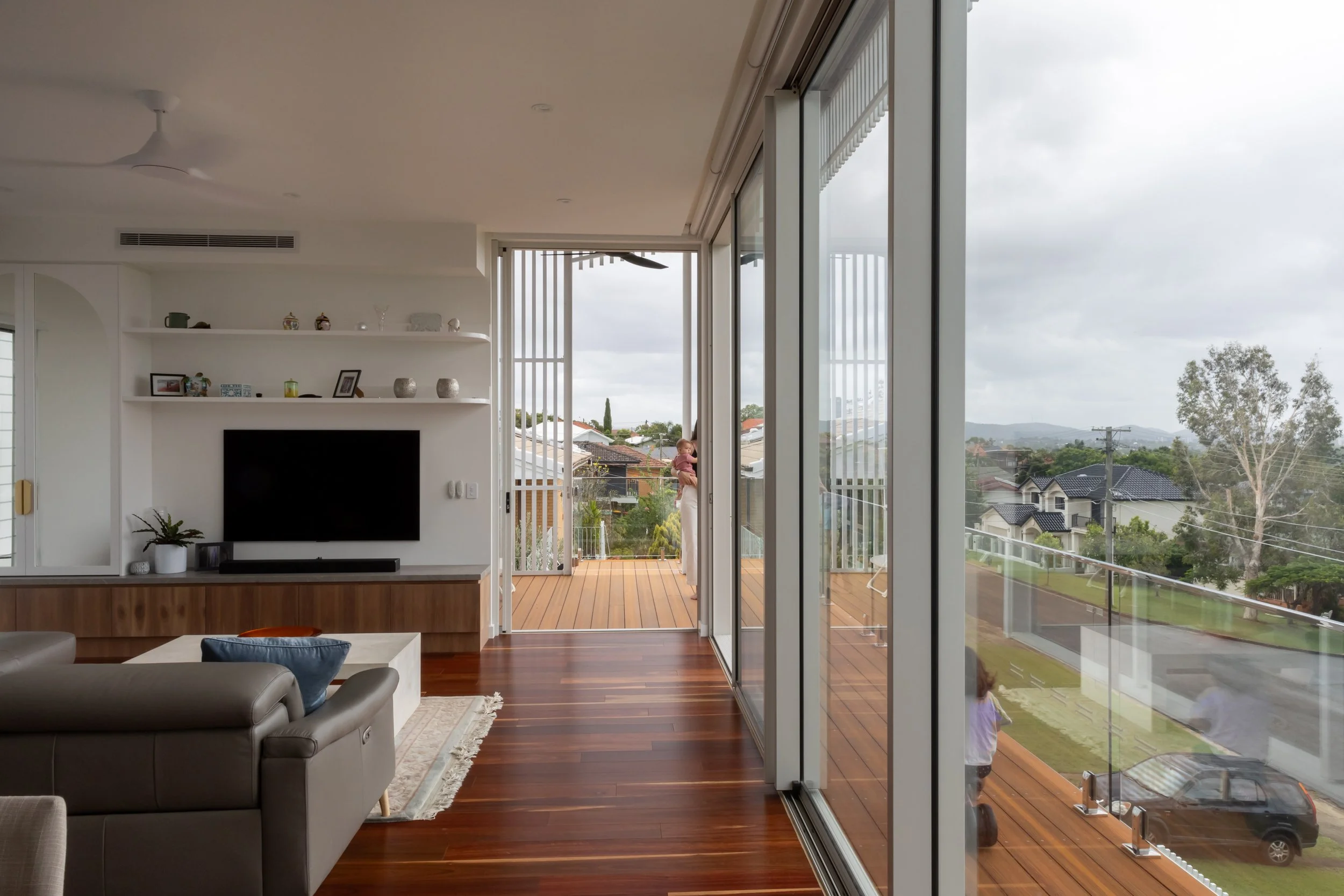
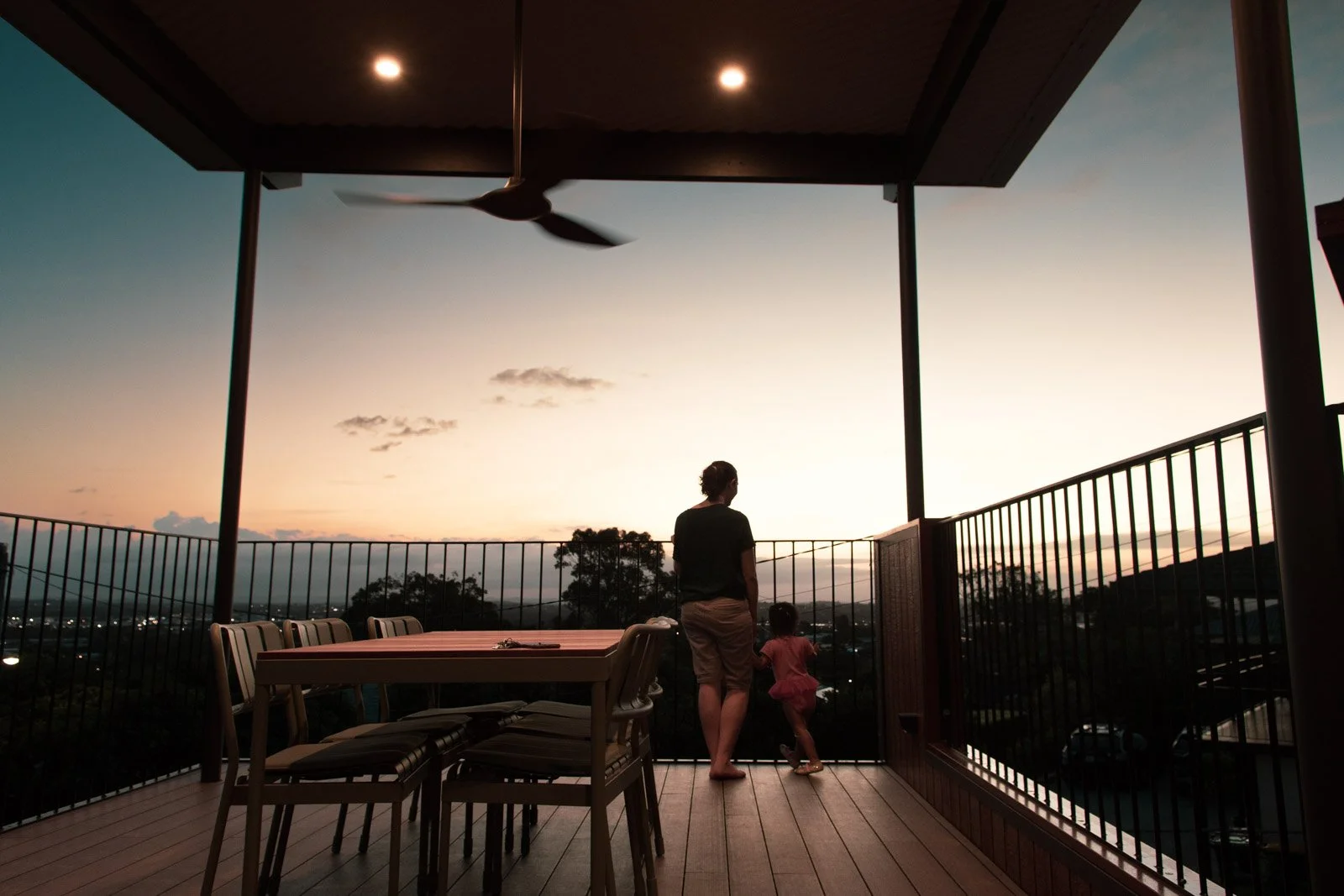
On the other side of the ridge in Moorooka was Deck with a House. Here the Butterbox was retained and renovated - modest internal spaces combining with a contemporary Deck, which became the main space for family living and entertaining. The rationale here was to celebrate what was already there - making the most of limited internal space, with the compact nature of the interior emphasising the outsized generosity of the new Deck addition.
All three projects involved a significant slope, so a cheap knock-down-rebuild was never on the cards.
What are the core design principles of a Butterbox renovation?
We listen to our clients. The correct solution is not pre-conceived - for every project there is an extensive process of listening and exploration.
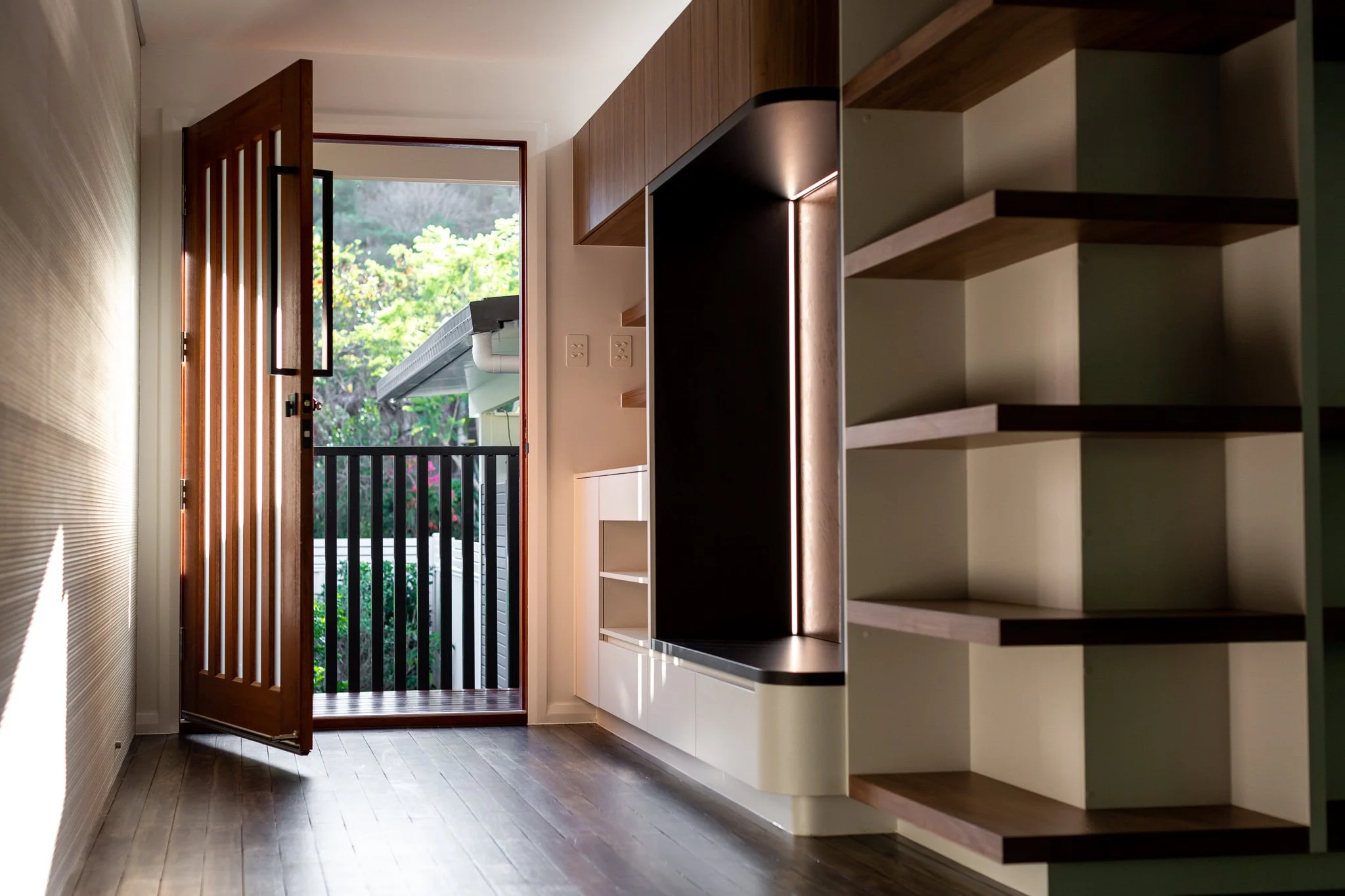
We honour what’s already there. There is always a story to tell, even if elements need to be changed or renovated. We feel that efforts to modernise Butterboxes by rendering and painting are often unconvincing. On the other hand, we often are delighted and marvel at the old-time workmanship of these homes when linings are stripped - hardwood studs individually checked onto base plates, for example, or mortise-tenon connections far more crafted than mechanical fixings commonplace today.
We take care with roof junctions. This can mean minimising the space where old-and-new meet to eradicate problematic box gutters and other risky junctions; alternatively making more extensive structural changes to the roof to ensure that any additions or extensions do not present long-term maintenance risks.
We do more with less. In Deck with a House, we managed to reconfigure the existing 3-bed, 1-bath upper floor plate into 3-bed, Ensuite/WIR, Bath/Laundry, open-plan kitchen/living/dining, and an overflow Play Room. There’s no escaping the compact dimensions, so a lot needs to be compressed into a small space - the generous deck is what gives relief to these more modest parts of the home.
We care for Bang for Buck. Regardless of scope or budget we want to be clever and intentional with our clients’ resources. The economics of each project is different, but we’re confident that Deck with a House would have almost doubled in cost if pursuing a new-build pathway (of course, noting that a new home would present new design opportunities - just that for most clients, the extra cost for the new build would have made it unattainable).
What are the compromises of a renovated Butterbox?
Compact spaces and low ceilings. The modesty of scale is almost unavoidable - although a new Extension or Addition can provide an opportunity to play on a contrast in volumes.
Bathroom Setdowns. Given the construction, setdowns in bathrooms to achieve a flush transition to the tiled areas can be difficult to achieve economically. This means accepting a small (or more expressed) step-up into wet areas.
Thermal Inefficiency. With the modesty of construction comes a trade-off in terms of thermal efficiency, and Butterbox homes are often cold in winter and hot in summer. Retrofitting insulation is possible but costly - this may mean an increased reliance on air conditioning and heating compared to homes that are more suited to our climate.
Risk of Lower Financial Rewards. While difficult to quantify, there’s a likelihood that the same investment in a Butterbox would not see the same financial return as a renovation to a sought-after style of home - a Californian Bungalow, for example. Further, there can be added costs involved to make old wiring, pipework and other services compliant.

Deck with a House doesn’t hide its butterbox bones but adds a new deck in a more contemporary language. This is just one way of dealing with a butterbox home. We tackle each one in its own way!
How can I achieve the best value for money on a butterbox renovation?
At Ever Architects we are used to working with everyday clients. There is no short-cut to it - when resources are somewhat limited, the need for good design becomes even more pressing. This is why Concept stage is so critical to the success of the project - and we commit time and effort to all that we do, regardless of scope or whether the project is mid-range or high-end.
An ideal intervention is well thought through, structurally efficient, and feels great because of connection to nature; refined through hard work, usually solving multiple challenges in a single step. If these elements are present, the expression of the idea becomes less pressurised. In other words - a great idea doesn’t need the expensive finishes and attention-grabbing “bits” to make it work. We work hard for every client to uncover a great Concept so that the expression itself can be simplified.
There’s no way around it: every square metre is thousands of dollars. We take the responsibility of making the best use of resources seriously: it’s our ever-present goal to do more with less. This applies even to high-end projects - if the budget was free and it opens up new possibilities in architectural expression, we want to apply the same mindset of clever, intentional thinking to ensure great bang-for-buck, even at higher price points.
Where do I start?
These are some high-level comments, but what we would love to do is to catch up with you - to meet you in person, hear your ideas, answer your questions, and see if we are best placed to help. Every project starts with a conversation. Get in touch today - we’d love to have a chat.
____

This article was written by Billy Lam, Architect, Founder and Director of Ever Architects. Over the first decade of Ever Architects he has overseen a range of new build, renovation, extension and residential fitout projects throughout Brisbane and South-East Queensland, from the mid-range to the high-end. Across budgets and sectors, he seeks to create spaces that are marked by a sense of peace derived through connection to nature.
Today Billy leads Ever Architects and works as an all-rounder overseeing our studio.
Curious about our work?