
Empty Nesters: Renovating for the Next Season
The kids have moved out, and now the house feels a bit too big and empty. Should you downsize - or could we make something new from the family home?
Often, when empty-nester clients approach us they share similar thoughts and challenges. The family home, which once used to be filled with noise and activity, now suddenly seems a bit quiet and, after years of family use, perhaps a bit tired and run-down. Downsizing is an attractive thought, but it comes with its trade-offs - loss of community, and just the thought of abandoning the memories and sentiment that’s held within its walls. Concerns emerge - would I spend too much and make this season more stressful, and be able to travel less? Would we stay healthy for long enough to live here for a decent amount of time? How can we future proof this place? Be ready to sell if we ever need to?
We love that architecture is such a personal and bespoke thing. In this changing season, we love walking with our clients to prepare them for the next season of life.
Here are some common threads that have run through our empty-nester projects - but if you’d like to chat more, please reach out and we’d love to explain things in more detail - or work out how we could create something that’s uniquely catered to you!
Is downsizing the right option for me?
Consistently our clients, on approaching us, have already seriously thought about (or tried to action) downsizing. Some, for example, have tested the market but not received the prices they hoped for. Others have seen that - as grandparents - they value having a house that can still remain the central hub for extended family to gather around, and the ability to host (or help out) their adult kids if the need ever arose. Moving out of the long-term family home also means a few things: disconnecting from established relationships with neighbours, getting used to new areas and routines, and letting go of sentimental memories. This is not to say that downsizing is a bad idea - just that, for some, the idea of staying put emerges as ideal once all things have been considered.
Am I designing for myself, or for someone else?
A few times clients have said to us that “if we were your age, our decisions would be different.” This is true, although the conversation can be quite nuanced and not so black-and-white. What’s the hoped-for timeframe of using and enjoying the home following the renovation? If it’s anything less than a decade, shouldn’t we be designing with the future resale potential of the home in mind?
As one example, on a current project in Daisy Hill we are creating a home for aging-in-place, but we are also imagining - as a secondary priority - how the interventions would be helpful and attractive to a family-type buyer in the future. For those clients, we are prioritising the family and Master spaces to their taste and requirements; at the same time, we already have a ‘future stage’ floor plan prepared so that the house can be easily adapted for a large family in the future.
How hard is it to adapt and design for aging-in-place?
Though some homes are more difficult to modify than others, you may be surprised at how effectively aging-in-place design changes can be implemented within an architectural build. Livable Housing Design Standards provide a minimum level of compliance, but we usually aim for more - widened corridors and doorways, accessible paths of travel with flush entries, future-proofed wet areas, thoughtfully-designed key spaces, and even the inclusion of elevators to travel between levels.
On recent projects in Forest Lake and Daisy Hill we have involved specialist Occupational Therapist input to help create solutions that are uniquely catered to the clients’ needs. Here there is a key difference between practical solutions of handles and heights, and an architectural one where all things work together.
What our Forest Lake client had to say
RT: Dad has been in a wheelchair. And so I remember before this renovation started, we had rubber ramps and we had areas of the house he couldn't even access to go from that to now here, where he's not bound to an area of the house, he can go right through the whole kitchen. He can access all the bathrooms. He can be a part of all the conversations. That to me has been the real winner in all of this.
TF: Billy redesigned our wet spaces so that includes our bathrooms, our laundries and our kitchen. With the bathroom, for example, what we ended up with is a bathroom you could put in a magazine. It really is amazing. It not only meets all of the standards from a compliance point of view. For a wet space, for a wheelchair, it's just a really, really amazing space. Just the choice of tiles, the grab rails. It doesn't look like a hospital bathroom. We didn't want our bathroom to end up looking like another hospital bathroom. What we've got is a bathroom that that would not only meet my needs, but anyone. You don't have to have a wheelchair to enjoy this bathroom. It really is fantastic.The kitchen, for example, we have a butler's pantry and incorporated in the butler's pantry is a laundry, so our wash and dryer set up on a plinth. We have ample cupboard space. We have a clothesline that extracts (sic) and comes down from the ceiling. We have an ironing board that folds up and slides into a cupboard. So just in that tiny little space, we address all of our our laundry needs there.
RT: And then you come into the kitchen and there's a section of the island which we're on at the moment, where he can bring his wheelchair. And you being able to cook and bake has been amazing.
TF: Yeah. You know, it's been really, really good.
Could multi-generational living work for my family?
Some of our clients have considered the potential of living together as different generations. In the 2024-completed St Lucia project, a new Extension catered for the Master Retreat above, and a Granny Flat below. In Albany Creek, our Granny Flat concept featured a special, cosy and nature-rich space catered to a grandmother - intentionally special and set-apart from the main residence, which she wanted to vacate for her extended family to live in. At Deck with a House in Moorooka, a lower-level, near self-contained space has housed different family members for extended periods - giving opportunities for both gathering and alone-time. Meanwhile, Lama House stacks generous Master Bedrooms on both levels, giving the occupants a choice - to live with the stairs and enjoy the sky, or to be grounded and connected to the garden. And finally Blade House could be divided into two co-lived spaces, sharing a central Laundry but able to be closed off from each other.
Our tip for multi-generational living would be to design it with care and intention. It would be irresponsible to design this without thinking about your family’s culture and background. How much do you want to prioritise having your own space? How often will you gather together? Where will be the spaces for accidental interactions amidst the everyday, and how will this be controlled? Designing with intention will help to make multi-generational living a more sustainable long-term arrangement.
It’s going to be a nice home, but I also want to travel!
This seems to be a big thing for all our empty-nester clients. Security while travelling becomes paramount - the ability for the house to be securely closed off; durability and low maintenance materials and selections; low maintenance gardens that won’t become too unruly; and incorporating camera and security technology within the build. If a friend or family is house-sitting while you’re away, you may even want to fit a keyed lock for your Master Bedroom and other internal spaces just for some added peace-of-mind.
_________
A final word
Renovating or building something new as an Empty Nester may seem a big (or even outsized) step in this season of life.
We believe that, done well, your home can become the foundation for the coming years - a place of rest, relaxation, hospitality and building memories with your loved ones.
_________
This article was written by Billy Lam, Architect, Founder and Director of Ever Architects. Over the first decade of Ever Architects he has overseen a range of new build, renovation, extension and residential fitout projects throughout Brisbane and South-East Queensland, from the mid-range to the high-end. Across budgets and sectors, he seeks to create spaces that are marked by a sense of peace derived through connection to nature.
Today Billy leads Ever Architects and works as an all-rounder overseeing our studio.
_________
If you’d like to chat more about this topic, just reach out - our team would love to hear from you.
Are you from a young family? Learn more about the unique challenges of designing for your growing family here.
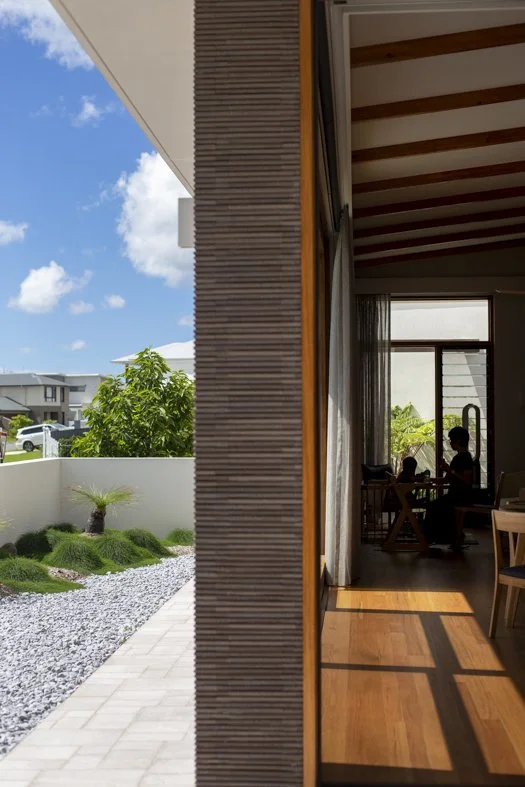
Lama House Rochedale
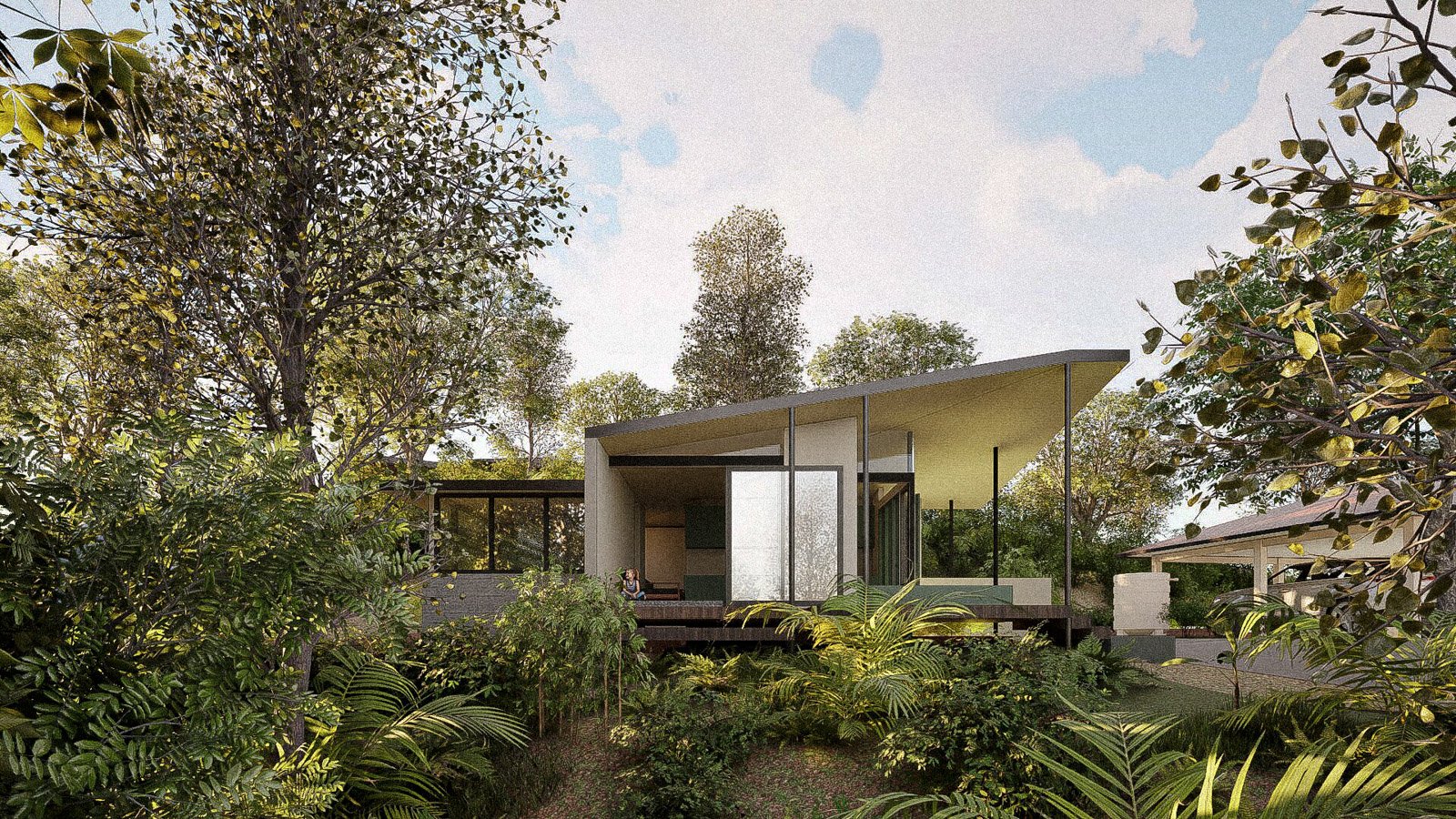
Albany Creek Granny Flat
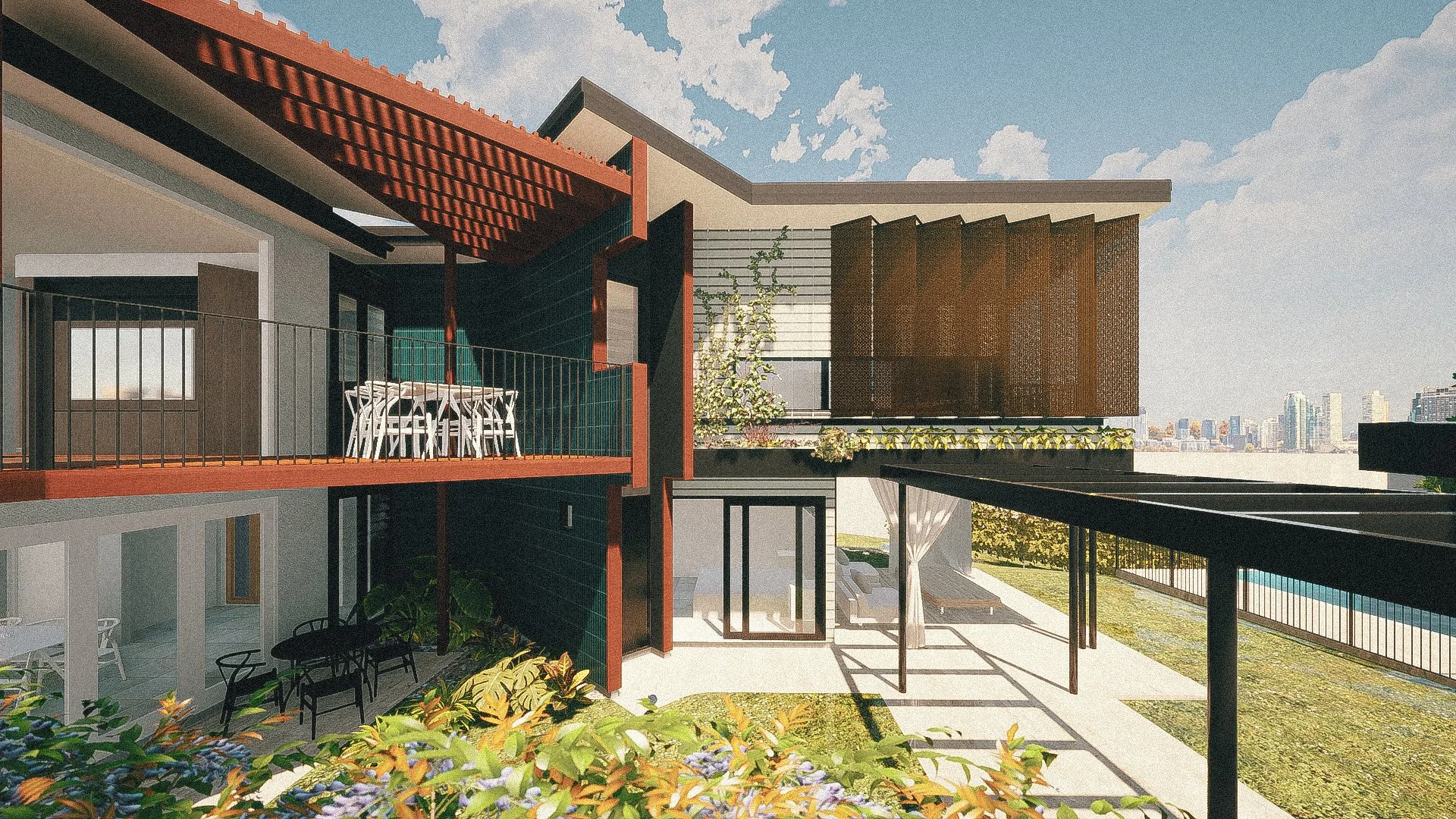
St Lucia Residence
